
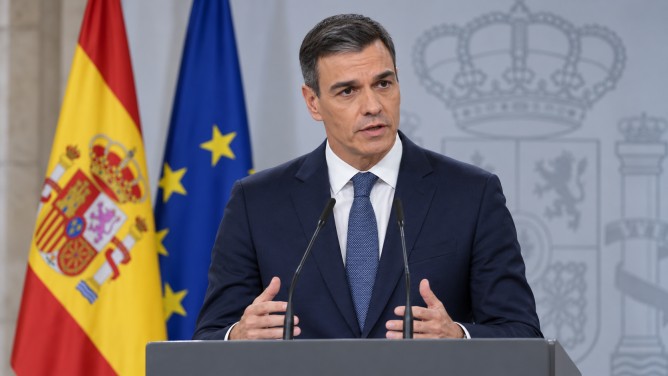
Spain is set to hold a snap general election on November 29 after the dissolution of its parliament, prompted by the failure of Prime Minister Pedro Sánchez’s government to pass crucial housing legislation. The election campaign is expected to commence on November 13, with a designated day of reflection on November 28.
The forthcoming vote will play a pivotal role in deciding the composition of Spain’s next government, but achieving a stable administration may prove challenging if no single party secures a majority. Sánchez’s decision to call the election followed a parliamentary defeat where proposed housing measures, aimed at protecting vulnerable tenants and modifying rental housing policies, were blocked by opposition parties and the Catalan party Junts.
This legislative setback underscored the difficulties faced by Sánchez’s government in navigating a fragmented political landscape. Key issues anticipated to dominate the election campaign include housing, taxation, immigration, energy prices, healthcare, pensions, and the cost of living.
The election also takes place amid ongoing controversies regarding Sánchez’s alliances with regional parties, most notably the agreement with Junts that facilitated his return as prime minister in 2023. Other significant challenges for his administration include scrutiny over its handling of the COVID-19 lockdown, concerns about a potential nationwide power blackout in 2025, and corruption investigations involving individuals connected to the ruling Spanish Socialist Workers’ Party (PSOE).
The November 29 election will ultimately determine whether Sánchez can retain his position as prime minister or if a new political coalition will take the reins in Spain.