
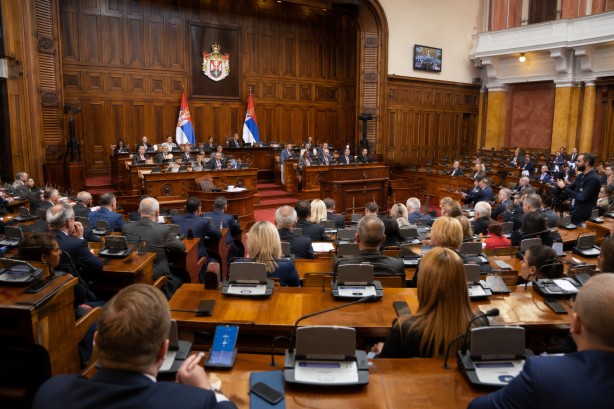
The Serbian National Assembly is set to cast a critical vote regarding the confidence in Prime Minister Djuro Macut’s government. This vote, scheduled for July 27, will assess whether the administration continues to hold the support of the parliamentary majority, announced by Ana Brnabić, the Speaker of the Serbian Parliament. This significant political development comes in the wake of a no-confidence motion introduced by opposition members earlier this year.
The motion, presented on February 13, has put the spotlight on several contentious issues that have stirred political debate within Serbia. Chief among the opposition’s grievances is the government’s controversial decision to revoke the protected status of the General Staff complex, a move that has raised questions about the handling of national heritage sites. Additionally, the opposition has expressed concerns about the ongoing criminal proceedings involving Culture Minister Nikola Selaković, which have further fueled their call for the no-confidence vote.
As the date for the parliamentary session approaches, all eyes are on the legislative body to determine the future of the current administration. The outcome of this session will be pivotal in deciding whether the Prime Minister and his cabinet will continue to lead, or if a change in leadership is imminent. This confidence vote stands as a critical juncture for Serbia’s political landscape, potentially reshaping the government’s course and impacting its policy directions.
The political climate in Serbia has been marked by rising tensions, with opposition parties actively challenging the government’s decisions and actions. The impending vote reflects the broader political dynamics at play, as lawmakers prepare to voice their stand on the government’s performance and direction. As such, the session not only tests the Prime Minister’s hold over the assembly but also underscores the ongoing debates surrounding governance and accountability in Serbia.