
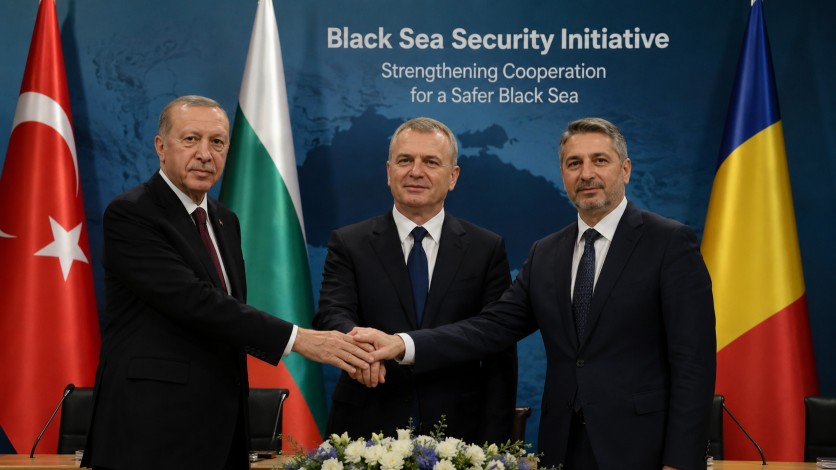
In a significant move to bolster security measures in the Black Sea, Türkiye, Bulgaria, and Romania have inked a new memorandum during the NATO summit held in Ankara. This enhanced agreement aims to expand the scope of their joint security mission, initially established to address the heightened threats following the Russia-Ukraine conflict. The mission, which has successfully neutralized over 150 drifting naval mines, now includes the protection of critical infrastructure such as energy facilities, telecommunications networks, and undersea pipelines.
Originally, the trilateral task force focused primarily on clearing naval mines to improve maritime safety. However, with the growing importance of safeguarding strategic infrastructure, the updated arrangement signifies a proactive approach by these nations to secure essential assets. This comes at a time when the Black Sea region faces increased security challenges, underscoring the importance of cooperative measures to protect vital trade routes and maritime operations.
Energy security emerges as a central theme in this expanded collaboration, particularly given the significant gas exploration and production activities in the Black Sea by all three nations. By aligning their security efforts, Türkiye, Bulgaria, and Romania aim to ensure the uninterrupted operation of major energy projects, which are crucial for their economic stability and regional energy supply.
This trilateral agreement highlights a shared commitment to enhancing regional security and resilience against potential threats. As the geopolitical landscape around the Black Sea continues to evolve, the coordinated efforts of these countries reflect an understanding that regional stability is paramount for the prosperity and safety of their people.
By broadening the mission beyond its original focus, Türkiye, Bulgaria, and Romania demonstrate leadership in regional security cooperation. This initiative not only addresses immediate security concerns but also lays the groundwork for long-term strategic collaboration, ensuring that critical infrastructure remains protected amidst ongoing geopolitical tensions.