
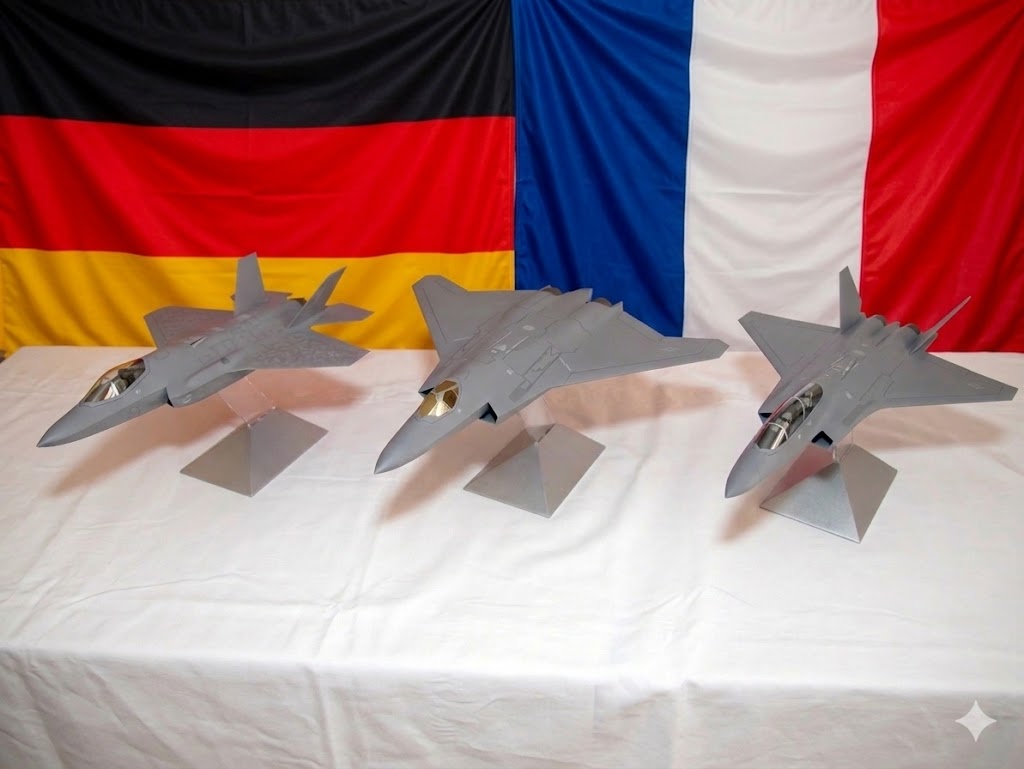
France and Germany have decided to terminate their collaborative fighter jet initiative, the Future Combat Air System (FCAS), after persistent disagreements stymied progress, marking a notable setback for European defense collaboration. The program, introduced in 2017 by French President Emmanuel Macron and then-German Chancellor Angela Merkel, was an ambitious plan to develop a next-generation fighter aircraft to succeed France’s Rafale jets and the Eurofighter fleets of Germany and Spain by the 2040s.
The primary roadblocks were entrenched conflicts between the involved companies: France’s Dassault Aviation and Airbus, representing both German and Spanish interests. Disputes centered on leadership roles, intellectual property rights, and the overarching management structure of the project. Dassault was adamant about maintaining a prominent position to protect its technology, whereas Airbus advocated for a more equitable partnership that included extensive technology sharing among the nations involved.
Furthermore, France and Germany diverged on the operational requirements of the aircraft. France envisioned a singular European fighter capable of carrying nuclear arms and operating from aircraft carriers, contrasting sharply with Germany’s distinct military needs. Despite numerous political interventions to salvage the venture, including recent mediation efforts, the persistent disagreements proved insurmountable, leading officials to conclude that continuation was futile.
Although the fighter jet aspect of the FCAS program has been discontinued, there are indications that some elements of the initiative might endure. European authorities have suggested that work could persist independently on various supporting technologies. These include sophisticated drones and a secure combat data network intended to link aircraft and military systems.
The dissolution of this program poses significant challenges for European defense integration, underlining the complexities that arise when trying to coordinate extensive military projects across several countries and industries. This development highlights the intricate dynamics of international defense cooperation and the hurdles that can impede such ambitious endeavors.