
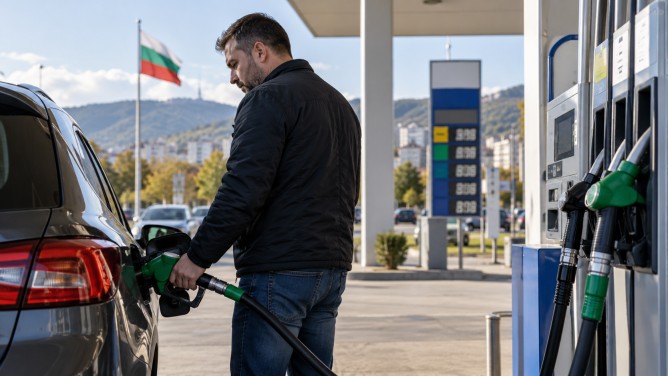
Bulgaria has witnessed the European Union’s steepest annual increase in fuel prices, as reported in September 2026. The costs for fuels and lubricants used in personal transportation surged by 42.2% compared to the same month in the previous year. This sharp rise positions Bulgaria at the forefront of fuel price hikes within the EU.
Following closely behind Bulgaria, Estonia and Lithuania experienced significant increases in their fuel prices as well, with rises of 40.6% and 40.2%, respectively. Conversely, Hungary recorded the smallest annual increase at 6.9%, with Ireland and Sweden also showing more moderate rises of 17.7% and 19.9% in fuel prices, respectively.
The broader EU region saw a general upward trend in fuel prices, which climbed by 31.4% year-on-year in September. This marks an acceleration from earlier increases of 16.9% in July and 23.8% in August. On a month-to-month basis, the price of diesel rose by 5.9%, while petrol saw an increase of 6.7% across the EU. Sweden notably led in monthly price hikes, with diesel and petrol prices increasing by 12.8% and 13.8%, respectively.
In Bulgaria, the surge in fuel prices has been particularly pronounced since February 2026. The average price of A95 petrol jumped from €1.26 per litre on February 27 to €1.65 by October 21. Similarly, the price of diesel rose from €1.29 to €1.91 per litre during the same period.
These price increases reflect a significant trend across the European Union, where fuel costs have been escalating, impacting consumers and economies. The data indicate that while some countries face steeper increases, the overall upward trajectory is evident throughout the region.