
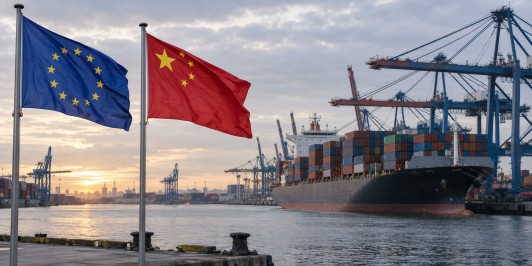
The European Union’s trade relationship with China is under scrutiny as the trade deficit between the two economic giants continues to widen. In July 2026, the EU reported a trade deficit of €36.5 billion with China, an increase from the previous year’s €32.3 billion. This growing gap underscores the challenges the EU faces in balancing its economic exchanges with China, which remain heavily skewed towards imports.
Data from Eurostat reveals that EU imports from China surged by 8% year-on-year to reach €53.9 billion in July 2026. In contrast, exports from the EU to China saw a decline of 1.6%, totaling €17.4 billion for the same period. This import-export imbalance has been a persistent issue for the EU, with the trade deficit from January to July 2026 amounting to approximately €234 billion.
The increasing deficit has prompted EU officials to consider measures aimed at achieving a more balanced trade relationship. Among the strategies under discussion are potential import restrictions in key sectors such as hybrid vehicles and chemicals. The EU has already introduced additional tariffs on Chinese electric vehicles in 2024, which has led to a noticeable rise in imports of hybrid vehicles from China, due to their different tariff treatment.
As the EU seeks to boost its exports and mitigate its reliance on Chinese goods, trade relations with China are anticipated to be a central topic in upcoming diplomatic discussions. The EU’s focus will likely be on increasing European exports and ensuring that strategic sectors are less dependent on Chinese imports.
The ongoing trade dynamics between the EU and China highlight the complexities of global trade relationships and the need for strategic economic policies. As Brussels continues to navigate these challenges, the situation remains a critical aspect of the EU’s international trade agenda.