
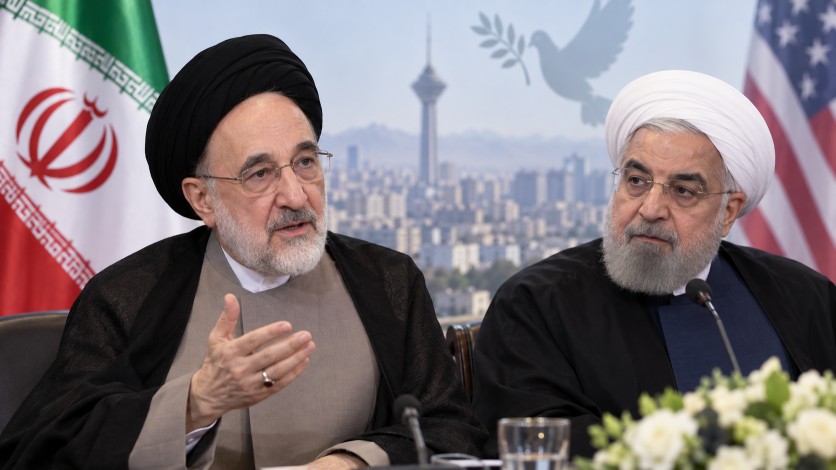
In a marked challenge to Iran’s hardline stance against the United States, former presidents Mohammad Khatami and Hassan Rouhani have advocated for a resolution to the ongoing conflict through what they term as an “honourable” or “dignified” peace. Rouhani has taken a further step by suggesting that the Iranian populace should be involved in the decision-making process regarding the continuation of hostilities with major global powers, questioning the rationale behind prolonged confrontation if it lacks public support.
Khatami urged for a shift from governing under the influence of wartime emotions, favoring measured diplomacy and negotiations instead. He emphasized that Iran’s long-term national interests should take precedence over the persistent calls for confrontation. These appeals for peace have sparked a backlash from Iranian hardliners, who have accused the former presidents of advocating surrender. Conservative media and loyalist rallies have expressed criticism, and the editor of the hardline newspaper Kayhan has even called for an investigation into Khatami and Rouhani’s actions.
This internal debate is unfolding against a backdrop of mounting economic pressure on Iran. The country is grappling with rising fuel costs and diminishing oil revenues, exacerbating existing strains. The strategic Strait of Hormuz remains a focal point of concern for global energy markets, as tensions continue to simmer. Despite these challenges, Iranian officials have maintained a strong public stance, suggesting that Tehran might adopt a more aggressive military position if diplomatic efforts with Washington do not yield the desired results. This rhetoric has raised worries that instead of leading to concessions, economic pressures might escalate the conflict.
Meanwhile, regional diplomatic efforts are underway, with Iran and Saudi Arabia maintaining dialogue over regional tensions. High-level discussions between the two nations aim to prevent further escalation and promote stability in the region. These discussions reflect a broader divide within Iran between those advocating for diplomacy and those supporting continued resistance. While former leaders call for negotiations and public involvement, the current leadership warns of potential military escalation if their demands remain unmet.