
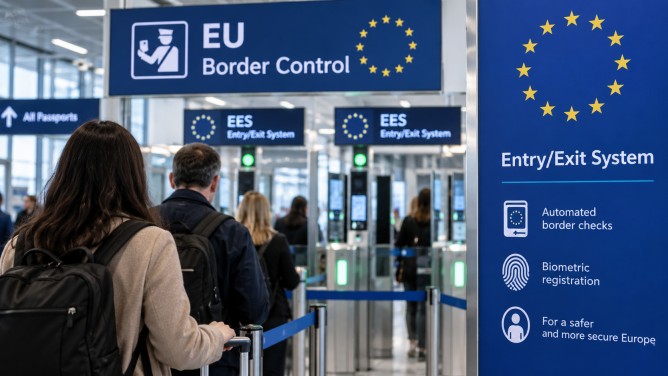
The European Union’s ambitious biometric Entry/Exit System (EES) is facing implementation delays across several member countries, as authorities grapple with the challenges of integrating the system into busy border points. Initially launched in October of the previous year, the EES mandates non-EU travelers entering the Schengen area to undergo biometric checks, including fingerprinting and facial recognition. However, technical and operational hurdles have prompted nine countries, including France, Greece, Italy, and Portugal, to seek additional time for full deployment.
While Spain has managed to overcome early obstacles and fully implement the EES, other nations such as Germany, Malta, the Netherlands, Switzerland, and Belgium are still in the process of rolling out the necessary infrastructure. The system’s slow adoption highlights the difficulties in managing large volumes of traffic at international hubs like Frankfurt and Schiphol airports, where some biometric checks have commenced, though smaller airports continue to face logistical challenges.
The EES aims to enhance border security by recording the entry and exit of non-EU travelers, and it has already logged approximately 200 million registrations. EU sources report that the system has successfully prevented around 70,000 individuals from entering the Schengen area, targeting those without proper visas, individuals who overstayed their permitted time, and those using forged documents.
Despite these successes, the uneven implementation has sparked concerns among travel bodies. The International Air Transport Association has previously warned about potential delays caused by the EES, especially during peak travel times, pointing to the risk of long queues at airports and other entry points. In response, a pre-travel application named Travel to Europe has been introduced, allowing travelers to submit necessary documents in advance. This application is already operational in Sweden and Portugal and is expected to expand to other countries.
As the EU continues to navigate the complexities of EES deployment, the focus remains on balancing security enhancements with the operational realities of busy border crossings. The ongoing adjustments underscore the broader challenge of modernizing border controls across the region while maintaining efficient travel flows.